The face of orthodontic treatment has changed significantly over the last few decades. A process that was dominated by metal braces and long office visits can now be defined as a discreet and comfortable process. The fact that straightening teeth without braces will become a reality of the future can now be changed to a reality.
Contemporary orthodontics ensures that the available solutions correlate with the demands of modern lifestyles, beauty, and comfort. Within the advancements in orthodontics, the development of clear aligners is considered a prominent alternative for conventional braces. The article examines the science, advantages, drawbacks, as well as the applicability of clear aligners, providing a comprehensive understanding of contemporary orthodontics.
Straightening Teeth Without Braces: An Orthodontic Change of Pace
There has been an increasing need for teeth straightening without braces, especially among the adult population who want to undergo orthodontic procedures without the aesthetic and ergonomic limitations of braces. Social confidence, work obligations, and flexibility in personal life might be some reasons behind these demands.
Contrary to conventional fixed braces, contemporary orthodontic treatments emphasize on the following aspects:
- Invisibly portable
- Improved comfort
- Better Oral Hygiene
- Lessened treatment breaks
Clear aligners represent a solution that satisfies theses expectations, and still provide a precise orthodontic treatment.
Aligners for Teeth: What are They?
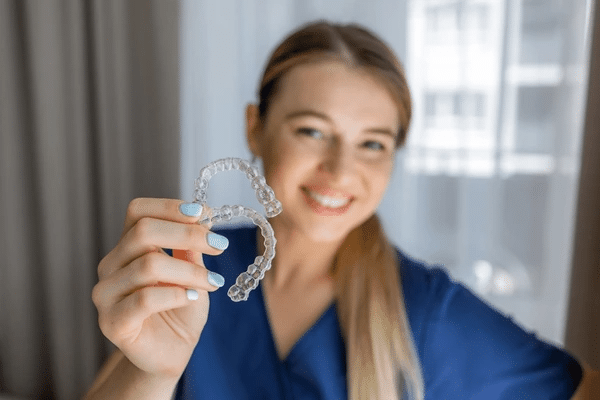
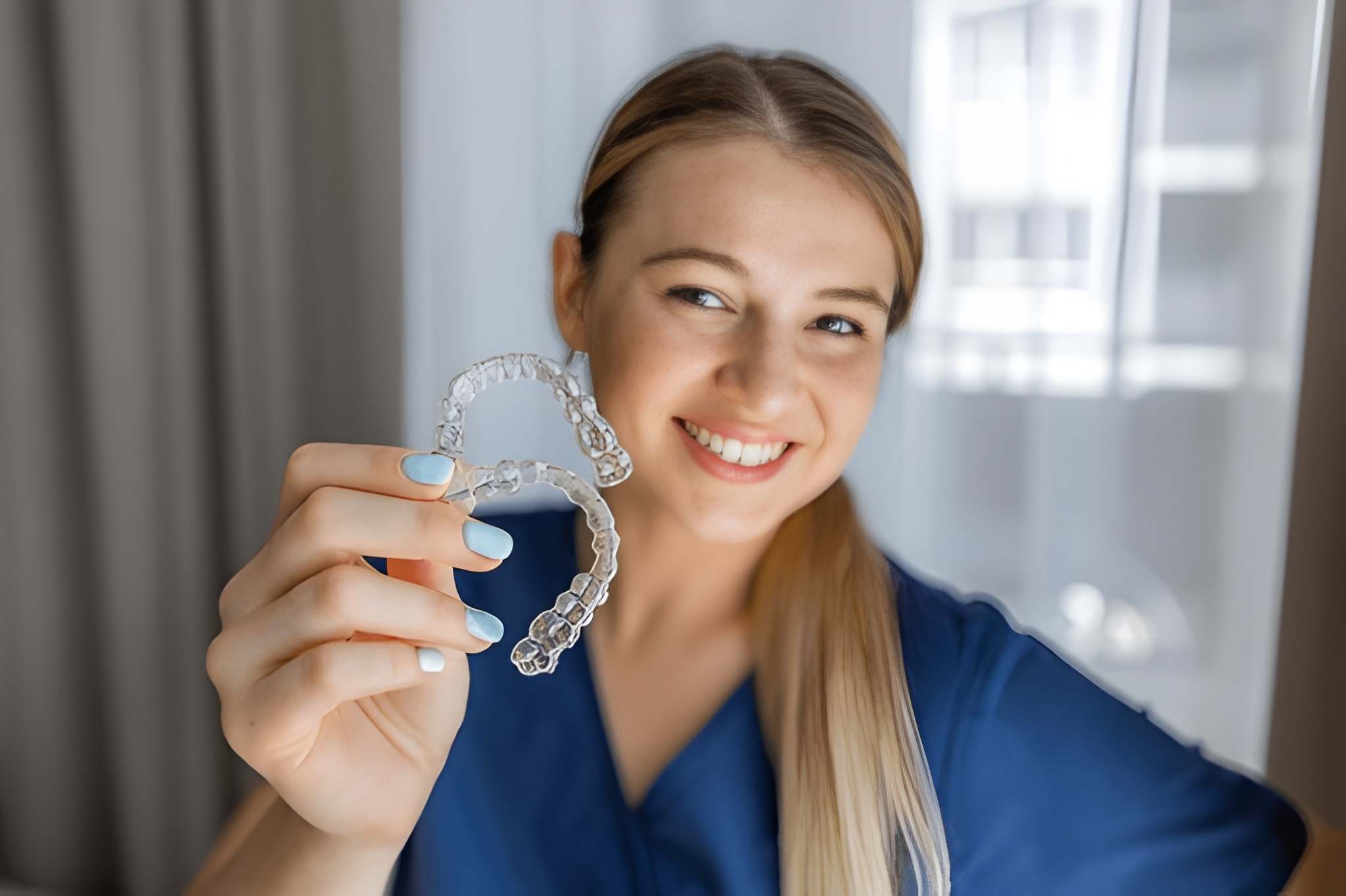
Clear teeth aligners are custom-made, transparent appliances created to fit snugly over teeth. Unlike traditional braces that apply forces to teeth via wires, clear teeth aligners utilize forces to move teeth into desired positions.
Every aligner is used for a particular period of time, usually one or two weeks, and then switched to the next one. This way, orthodontic movement takes place gradually.
Clear braces work with advanced digital manufacturing techniques, which provide for a personalized appliance for each client. Clear braces also appear almost invisible, with their transparency, and thus, they do offer invisible braces for orthodontic services.
Process of Using Clear Aligners: Step-by-Step Treatments Being
Knowing more about clear aligners will keep you well-informed as you proceed with treatment.
1. Digital Assessment and Planning
The first step involves an exhaustive digital assessment of the teeth. Advanced imaging and scanning technology is used to create an accurate three-dimensional image of the dental structure in the patient.
2. Customized Treatment Design
In the digital model, the treatment approach is outlined step by step. Every phase of tooth movement is tracked in order to ensure predictable and controlled progress.
3. Series of Custom Aligners
A series of aligners is created, and each tray is incrementally designed to move the teeth closer to the final alignment.
4. Progressive Tooth Movement
The patient wears each aligner for the duration before progressing to the next. Gradually, the teeth are aligned according to the plan.
5. Monitoring and Refinement
Regular follow-ups will make sure that everything is on track. Changes can be made as a result.
This digital-first strategy is the hallmark of contemporary orthodontic care and underscores the clever innovative move behind the popularity of clearer aligners over more conventional practices.
Invisible Teeth Straightening: Why Discretion Counts
In recent
One of the most appealing benefits of clear aligners lies in their ability to provide an “invisible orthodontics” solution, which means straightening one’s teeth discreetly. Metal braces, for instance, are quite noticeable.
Psychological & Social Gains
- Boosted confidence in professional and social situations
- Minimized self-consciousness during treatment
- Able to smile naturally throughout the process
For both adults and teens, having discreet straightening capabilities can be a major factor in enhancing patient compliance.
Differences Between Clear Aligners and Braces
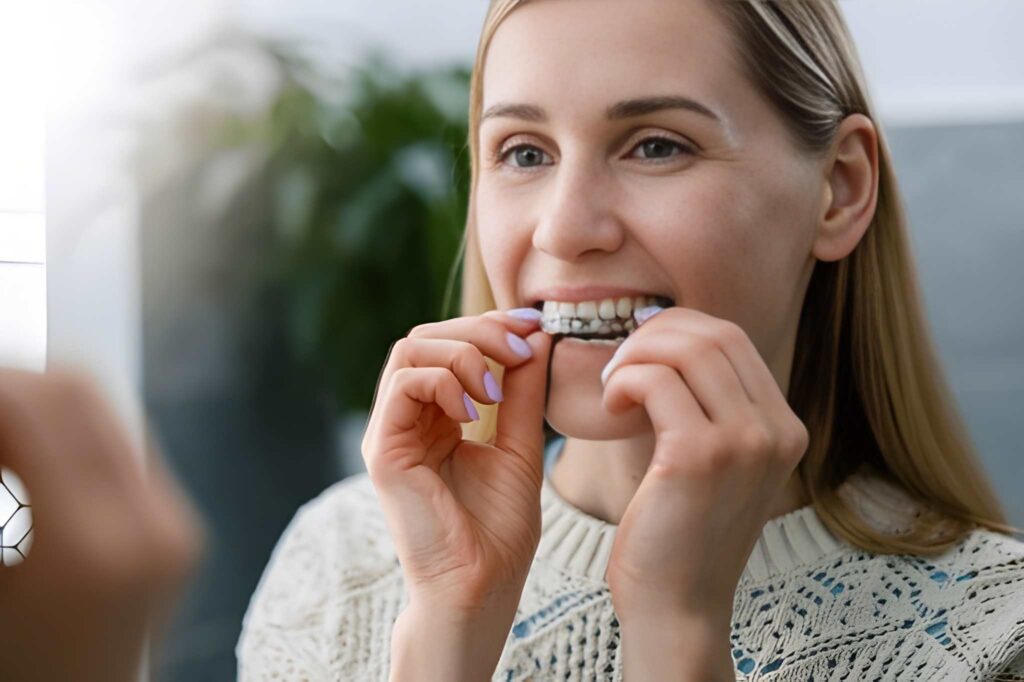
When aligner vs braces are compared, many aspects stand out as significant differences.
Appearance
Clear braces and aligners are clear and discreet, whereas braces are noticeable and boast the spotlight.
Comfort
Aligners do not consist of metal brackets and wires, which cause fewer irritations to the gums as well as the cheeks.
Oral Hygiene
The removable aligners can becleaned with regular brushing and flossing, whereas fixed braces can often trap food and plaque.
Lifestyle Flexibility
Aligners can easily be removed for consumption of foods as well as social events.
Treatment Scope
Although braces might still be needed in certain cases, technology in aligners has reached such sophistication that it is possible to treat increasingly complex cases of orthodontic problems.
Both are effective, although patient choice or considerations of efficacy may influence which is preferred.
Options Other than Metallic Braces
Alternatives in Orthodontics
As a treatment alternative for patients who want something different from conventional metal braces, the most modern and patient-friendly technology available today would be the clear aligners.
These alternatives target people who:
- Perfer a low-key method
- Want fewer lifestyle restrictions
- Seek increased comfort
- Appreciate modern digital treatment plans
Clear braces have made orthodontics more accessible to patients who would otherwise forego treatment due to aesthetic or comfort-related issues.
The Comfort Advantage of Clear Aligners
Comfort is an important consideration with regard to patient satisfaction. Clear aligners are engineered to provide a gentle, continuous force, thereby reducing the pain that can be caused by conventional orthodontic braces.
Other comfort-related benefits include:
- Smoother surfaces, no sharp edges
- Gradual force application
- Lowered Emergency Visits
Since aligners are made individually for each patient, they fit exactly and comfortably from instead of themelves.
Oral Hygiene During the Process
The advantage of clear aligners is that it encourages very good oral hygiene practices. The removal feature of these aligners ensures oral health is not comprised in any way since patients can brush and floss as they normally would.
This will minimize the risk of:
- Tooth Decay
- Gum inflammation
- Plaques
- Since
In promoting positive oral habits, aligners play an important role in achieving straight teeth, in addition to their effects on dental wellness.
Clear Aligners Based on Different Age Groups
Clear braces, also known as clear aligners, can be employed on a broad spectrum of people.
- Teenagers
- Have confidence when socializing and at school.
- Reduced food limitations
- Comfortable fit during growth stages
Adults.
- Discreet treatment for professional environments
- More flexible scheduling and fewer appointments
- Fixing Alignment Issues Over Many Years
- This adaptability makes clear aligners an attractive option across the generations.
Technology and Innovation in Modern Orthodontics
Contemporary orthodontic practices involve extensive utilization of digital technology. Clear aligner therapy combines:
3D Digital Scanning
“Computerized treatment simulations allow
Precision manufacturing
These technologies enable patients to see what the expected outcome will look before the process has even started.
Limitations of Clear Aligners
Although there are many benefits to using clear aligners, there are some drawbacks. The success of treatment relies highly on the patient’s compliance with wearing the aligners.
On the other hand, there may be situations whereby complex orthodontic problems can only be addressed using other techniques. A professional assessment is required to be able to judge the appropriateness of the process.
Why Professional Guidance Matters
On the face value, orthodontic treatment seems very simple, more so with the advent of latest orthodontic products such as clear invisible orthodontic braces. However, to achieve the goal of ensuring safe, effective, and sustained orthodontic treatment, the role of expert guidance cannot be overlooked. This holds importance at every stage of orthodontic treatment. This can only be achieved with the help of knowledgeable orthodontic experts.
Each individual patient’s dental architecture is different.
The alignment of teeth, jaw positions, bite function, and periodontal circumstances must all be examined before any treatment procedure starts.
This customized analysis must be conducted by a dental expert to detect any problems related to overcrowding, misaligned biting, or periodontal problems.
In the absence of these customized analyses, the aligners could cause tooth movement, possibly leading to any combination of pain, suboptimal outcomes, or problematic oral health problems down the line and at any stage of treatment or follow-up.
Another crucial part of expert orthodontic treatment is ongoing observation. Sometimes, teeth don’t move as expected, with some subtle changes happening all through the process. One benefit of regular check-ups is that experts monitor progress, check adjustment fit, and make sure that the teeth are moving as they should. This observation also helps in the detection of problems in tooth movements, such as delayed tooth alignment, rotation, or force on adjacent tissues, which might not have been observed earlier when they become a problem.
Professional supervision also enables adjustments in the treatment process. If there is a lag in the expected progress or if there are new issues, the aligners can be improved, the time frame changed, or supporting strategies incorporated.
Perhaps the most important factor, however, is that professional advice ensures that the end result remains stable in the long term. Straightening teeth remains part of orthodontic care. This process involves retainers. It also involves bite analysis before treatment and post-care. A dental professional creates retention strategies that ensure that the teeth remain aligned after undergoing orthodontic treatment.
In conclusion, professional consultation guarantees not only the effectiveness of treatment but also its safety and controllability to result in healthy smiles.
Conclusion:A Modern Smile with Dentalscotland
The development of orthodontics has also ensured that teeth straightening without braces is easier than ever. Clear aligners provide an effective mix of technology, aesthetics, and patient-focused care to create a new alternative for people who want to achieve self-assured smiles. At Dental Scotland, state-of-the-art orthodontic treatments and practices are facilitated by modern digital planning and treatment-oriented programs. Besides the various treatments for improving and straightening crooked or misaligned teeth and jaws, other services encompassing cosmetic dentistry, restoration treatments, smile design, and general dentistry address the diverse needs of clients. “Through embracing the power of innovation, but always focusing on the patient, dentalscotland remains a shining example of the future of modern dentistry, a place where technology, expertise, and patients come together in the form of healthy, confident smiles.