Tooth decay is one of the most common dental problems among people of all ages. While many people understand that sugar has a role to play in cavity formation, not as many know precisely how to avoid tooth decay without having to eliminate sweets from their diets altogether. At Dental Scotland, we believe that by instilling the right knowledge and practices, you can enjoy sugar in moderation while still being able to protect your oral health.
In this article, we’ll discuss the science of sugar and tooth decay, some practical methods of tooth decay prevention, and how to naturally prevent cavities-so you can live your life without having to fear the dentist’s drill.
Understanding Sugar and Tooth Decay
Tooth decay begins when oral bacteria feed on sugars and starches left on your teeth. These bacteria produce acids that weaken tooth enamel, the hard protective outer layer of the tooth. Over time, this acid attack can create tiny holes in the enamel known as cavities.
How Sugar Promotes Decay
The bacteria of your mouth, especially the bacteria known as Streptococcus mutans, really love sugar. Whenever you drink or eat something sweet, these bacteria process it and excrete acid as part of their metabolic processes. This acid decreases the pH in your mouth. When the pH in the mouth falls below 5.5, then the minerals around the enamel are lost, a process known as demineralization. If this process is not interfered with promptly, it might lead to the deterioration of enamel and, finally, a cavity.
It is essential to appreciate that tooth decay begins immediately with sugar exposure. Frequent snacking or sipping sweetened drinks throughout the day keeps your mouth in a continued state of acid attack. Saliva helps neutralize acids and pro-duces remineralization, but if you eat sugar too often, saliva does not have time to do its work, and decay advances.
Not all sugars are created equal when it comes to causing cavities.
Thinking of foods that cause cavities, it should be important to note that not all sugars are created the same. Natural sugars in whole fruits and dairy products are less damaging compared to additional sugars in snacks and beverages alike.
High‑Risk Sugars
Some common high‑risk sugar sources include:
- Caramel and dried fruit are examples of sticky snacks.
- Sugary sodas, juices, sweetened coffee drinks
- Candy that does not melt easily includes lollipops and mints.
- Baked goods and snacks that stick to the teeth
The sticky and the slow-dissolving sugars remain on the teeth surfaces for long, thereby feeding bacteria longer. It is actually more often and for how long a tooth was exposed to sugar that plays the most critical role in the development of tooth decays.
Saliva: Your Natural Defense System
Your body is innately equipped with defences against decay. At the forefront is saliva, which works to wash away food particles, neutralize acids, and initiate the remineralization process in which minerals are redeposited into the enamel. However, frequent sugar consumption can overwhelm saliva’s capability to restore balance, leading to decline in pH levels and erosion of enamel.
Dry mouth, for example, is a condition wherein saliva production decreases and may lead to increased decay vulnerability. These individuals are usually experiencing certain medications or chronic health conditions that result in dry mouth and can seek professional consultation with dental experts to alter care routines to avoid further long‑term damage.
Healthy Eating Habits: How to Protect Your Teeth from Sugar
For most people, it is unrealistic to completely eliminate all sugar from your diet. However, if you make smart substitutions, coupled with other healthy habits, you can drastically reduce the risk of cavities.
1. Drink Water Instead of Sugary Drinks
The big villains in tooth decay are sugary drinks. Replacing soda, juice, and sweetened coffee with water helps wash sugars away and reduces acid attack. Water also stimulates saliva flow, further protecting enamel.
2. Use Sugar‑Free Gum
Chewing sugar‑free gum does stimulate saliva. This saliva can help rinse food particles and acid away, especially after meals or snacks. Look for products containing xylitol as its natural sweetener. It can prevent bacterial growth and provide added protection.
3. Limit Sugary Treats to Mealtimes
Snacking on sweets only at mealtimes, rather than between them, can decrease the number of acid attacks on your teeth. During meals, the mouth produces more saliva, which helps neutralize acids more effectively. The worst thing to do is to “graze” on sugary snacks throughout the day.
4. Brush or Rinse After Sweet Snacks
Food particles are removed, and this reduces the time that sugar is allowed to stay in contact with the teeth; brushing immediately after eating sweets or at least rinsing the mouth provides some benefits, even without brushing.
5. Choose Fiber‑Rich Foods
Eating crunchy fruits and vegetables like apples, carrots, and celery cleans teeth naturally and helps in the stimulation of saliva. High‑fiber foods also balance their sugars, allowing the restriction of decay risk.
Essential Tips of Tooth Decay Prevention
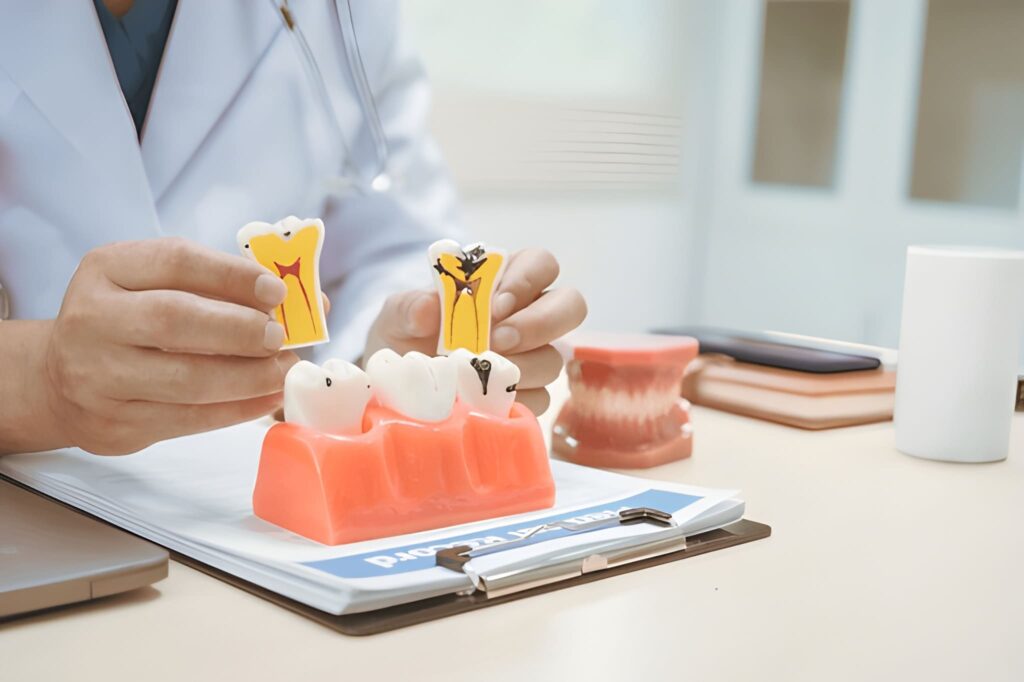
It’s not all about cutting down sugar intake; it’s also about establishing a good routine in oral hygiene. Here are some very simple and effective ways to prevent tooth decay:
Brush Your Teeth with Fluoride Toothpaste Twice a Day
Brushing for two minutes, twice daily, can remove plaque-an adhesive film of bacteria that causes decay. Fluoride toothpaste strengthens the enamel and creates acids to slow down demineralization.
Floss daily
Flossing removes plaque and trapped food particles from between teeth and below the gumline, areas where a toothbrush cannot reach. This serves to prevent cavities and gum disease.
Use Mouthwash Where Necessary
Antisepsis mouth rinse can reach areas brushing and flossing may miss. A fluoride mouthwash can also raise the strength of the enamel.
Regular Visiting to Dentist
Early detection of decay is essential, and routine dental visits play a very important part in accomplishing this. At Dental Scotland, we recommend at least two check‑ups annually. Professional cleaning will remove stubborn plaque, while fluoride treatments or pit and fissure sealants can be applied by our team to protect vulnerable areas.
Preventing Tooth Decay: Habits That Make a Difference
Beyond diet and hygiene, a few extra habits can greatly reduce your chances of getting cavities:
Don’t Snack Before Bedtime
This means that eating before bed, even healthy snacks, can lead to an increased risk of decay if your teeth aren’t cleaned afterward. Try to have a 2‑hour separation between your final snack and brushing your teeth for the night.
Eat a proper diet.
Apart from this, calcium and phosphorus-rich foods can help in rebuilding tooth enamel: cheese, milk, eggs, leafy greens. Try to balance your meals with nutrient-dense choices that support oral health.
Avoid Acidic and Strongly Sugary Drinks
Even sugar‑free sodas can be highly acidic and contribute to enamel erosion. Choose water or milk when possible to protect your teeth.
Prevent Cavities Naturally: What Works
The common question asked by many is, can one prevent cavities without such harsh measures? The answer is yes; you will be able to prevent them by combining dietary awareness with good oral care.
- Saliva-Boosting Foods and Habits
- Chew sugar‑free gum
- Eat crunchy vegetables
- Also, do not forget to drink a lot of water and stay well-hydrated.
- Avoid snacking between meals
- Natural Sweeteners That Help Protect Teeth
Xylitol in some sugar‑free gums and toothpaste may prevent bacterial replication and reduce acid production. Although xylitol itself does nothing to prevent decay, it may be of supplementary benefit in a comprehensive preventive plan.
Excluding Children from Dental Caries: How to Prevent Tooth Decay in Children
The children are more prone to caries because of thinner enamel and development of oral habits. Snacking should be monitored by the parents, and good brushing habits should be induced from an early age.
- Prevention of Tooth Decay in Children
- Limit juice boxes and sugary snacks
- Encourage water instead of sweetened drinks
- Brush children’s teeth twice a day
- Use fluoride toothpaste appropriate for age
- Book regular dental visits with Dental Scotland
- Starting good habits early lays the foundation for a lifetime of oral health.
Quick Takeaways: Understanding Sugar and Tooth Decay
Essentially, there is an interaction between sugar and bacteria in the mouth that causes tooth decay. When you take in some sugary drink or food, the bacteria in your oral cavity will utilize the sugar for their metabolism, releasing acids as a byproduct. Those acids attack the enamel—the hard, protective outer layer of your teetheroding the enamel and weakening it to create weak spots, which may develop into cavities over time. This is the reason why sugar feeds bacteria that produce acid and erode enamel, making moderation and timing of sugar intake crucial.
Another major factor that really increases the risk of decay is frequent snacking. Every time you take sugar or starch, the bacteria make acid, and the enamel is under repeated acid attacks. If you snack continuously, your mouth doesn’t have enough time to recover. Acid continuously weakens the teeth. Therefore, frequent snacking increases the risk of decay, thus structural meals are important rather than grazing throughout the day.
It also helps neutralize acid and repair minor enamel damage by remineralization. However, for saliva to be effective, it needs time. Therefore, it is essential to allow gaps between meals and snacks. Saliva neutralizes acid but needs time between meals for the restoration of pH in the mouth. The longer it takes for sticky candies and slow-dissolving sweets to disintegrate, the longer they will stick to the teeth, feeding bacteria. Because sticky candies increase the risk of cavities, they should be limited or consumed only during meals. Good oral hygiene habits, such as brushing, flossing, and mouthwash, counteract sugar. Finally, regular dental visits catch issues early and allow preventive measures to stop decay before it progresses
Conclusion
Medically, with the advanced technology of DentalScotland Dentist. Learning how to avoid tooth decay does not mean one should completely abstain from sugar. With smart habits and proper oral hygiene, including regular dental care, you will be able to enjoy sweets in moderation and protect your smile.
At Dental Scotland, our team provides comprehensive care that goes beyond cavity prevention. From routine check‑ups and cleanings to advanced restorative treatments and cosmetic dentistry, we support long‑term oral health for the whole family. Whether you’re seeking clarification on how to protect your teeth from sugar, personalized improvement in your routine, or advanced preventive treatments, Dental Scotland aims to help you smile confidently without necessarily having to give up the foods you love.