
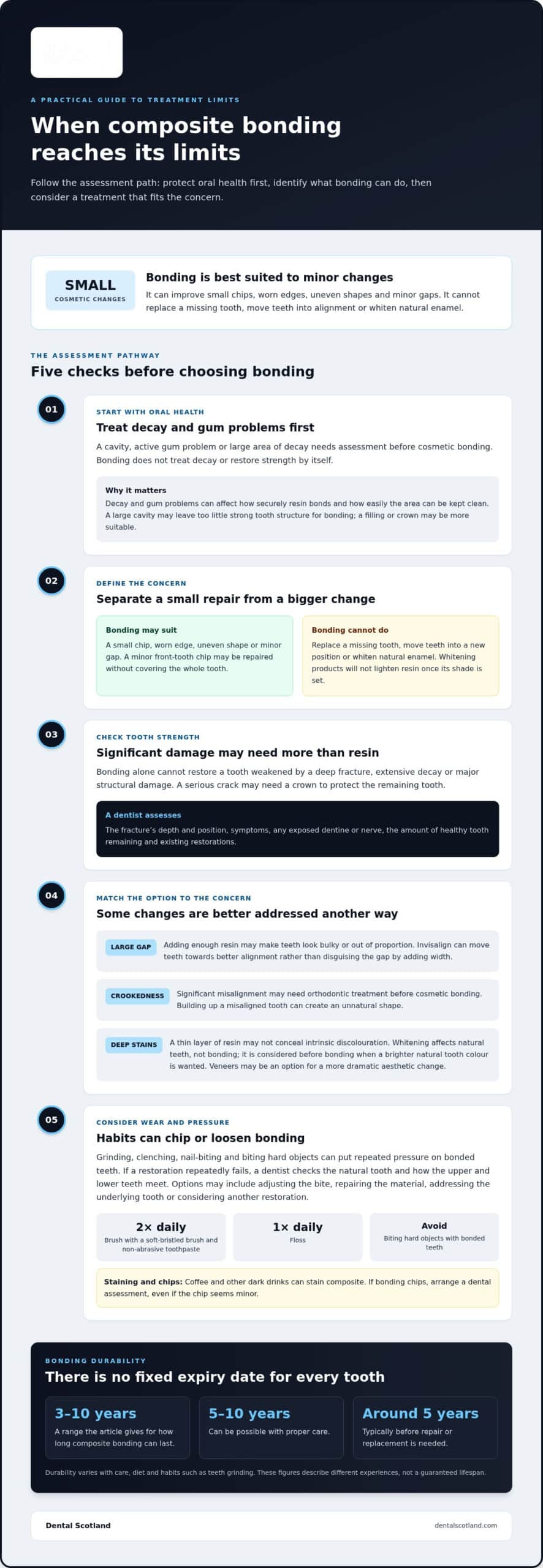
Composite bonding can improve small chips, worn edges, uneven shapes and minor gaps, but it can’t replace a missing tooth, move teeth into alignment or whiten natural enamel. Knowing what composite bonding cannot fix also means recognising when decay, gum problems or substantial tooth damage need attention first. For severe structural damage, a stronger restoration may be more suitable.
Composite bonding can create a more even, brighter-looking smile, but it has practical limits and is best suited to small cosmetic changes. This guide explains what can composite bonding not fix, when another treatment may be more suitable and what to address before considering bonding.
Bonding may not be the right solution for deep discolouration, significant misalignment or habits that put extra pressure on teeth. Knowing these limits helps you set realistic expectations and consider which treatment is suited to your concern.
Key Takeaways
- Use bonding for small cosmetic changes, not to replace missing teeth or move teeth into a new position.
- Understand how wear, staining and habits such as grinding can affect the appearance and condition of bonded teeth.
- Address decay and gum problems before considering cosmetic bonding, so oral health comes first.
- For substantial damage or severe misalignment, explore whether a different restoration or orthodontic treatment better suits the problem.
What is composite bonding?
Composite bonding uses tooth-coloured composite resin, shaped on a natural tooth to improve its surface or repair a small chip. A dentist places and shapes the material, then hardens it. For a minor front-tooth chip, bonding can restore the edge without covering the whole tooth.
Can NHS dentists provide composite bonding in the UK? Yes, an NHS dentist can provide it when clinically appropriate, but bonding sought solely to improve appearance is generally not NHS treatment. Clinical need, such as repairing damage, is more relevant than a preference for a different smile shape.
Bonding durability varies with care, diet and habits such as teeth grinding. Composite bonding can last 3 to 10 years, and with proper care it can last 5-10 years. It typically lasts around five years before repair or replacement is needed. These figures describe different experiences, not a fixed expiry date for every tooth.
A small chip doesn’t always mean the whole restoration needs replacing. If the natural tooth is intact and the damage is limited, a dentist may repair the area by adding and shaping composite resin. The decision depends on the condition of the bonding, the chip’s size and how the upper and lower teeth meet.
Replacing the bonding may be more suitable if it is extensively chipped, worn, stained or repeatedly failing. A dentist first assesses the material and natural tooth, as damage beneath the bonding can change the treatment needed. Replacing a restoration is different from making a small repair to its surface.
Bonding can change in appearance and condition over time. Composite resin may stain or chip, and whitening products won’t lighten resin once its shade is set. Avoid biting hard objects with bonded teeth, as this can crack or dislodge the material. If bonding chips, arrange a dental assessment, even if the chip seems minor.
Alternatives for major structural damage or severe misalignment
Composite bonding may not fully mask deep stains: a thin layer of resin might not conceal intrinsic discolouration, and whitening affects natural teeth, not bonding. Bonding can fill small gaps, but a large gap may call for Invisalign instead of added resin.
Damage bonding cannot address alone
Bonding alone can’t restore a tooth weakened by a deep fracture, extensive decay or major structural damage. For example, a serious crack may need a crown to protect the remaining tooth, rather than an aesthetic layer of composite. The dentist assesses the fracture’s depth and position, symptoms, any exposed dentine or nerve, the amount of healthy tooth remaining and existing restorations. These details help determine whether a repair can support the tooth.
Repeated pressure from grinding, clenching, nail-biting or biting hard objects can chip or loosen bonding. If a restoration repeatedly fails, the dentist checks the natural tooth and how the upper and lower teeth meet. Treatment might involve adjusting the bite, repairing the material, addressing the underlying tooth or considering another restoration.
Closing large gaps between teeth
Composite bonding can close small spaces by adding resin to the edges of neighbouring teeth. For a large gap, adding enough material may make teeth look bulky or out of proportion. Invisalign can move teeth towards better alignment, addressing the gap rather than disguising it by adding width. Significant crookedness may also need alignment treatment before cosmetic bonding is considered.
Deep intrinsic stains present a similar limitation: resin may not fully conceal the colour, and whitening won’t change the resin’s shade after bonding. If you want a brighter natural tooth colour, whitening is considered before bonding. Veneers may be an option for a more dramatic aesthetic change.
To help prevent avoidable damage, brush twice daily with a soft-bristled brush and non-abrasive toothpaste, and floss once daily. Coffee and other dark drinks can stain composite; avoid biting hard objects with bonded teeth. A chipped restoration should be assessed at a dental appointment, even if the natural tooth seems unaffected. For guidance on composite bonding treatment, consider how the damage, tooth strength and bite affect the options.
Oral health issues that may need treatment first
Cosmetic bonding works best when the teeth and gums are healthy enough to support it. Decay, a large cavity or active gum problems can affect how securely resin bonds and how easily the area can be cleaned. Treating these issues first prioritises oral health and avoids covering a problem that needs separate care.
A cavity needs assessment before cosmetic treatment. A large cavity may leave too little strong tooth structure to support bonding, so the dentist treats the decay first and considers whether a filling or crown is more suitable. Bonding adds material to a tooth; it doesn’t treat decay or restore strength by itself. Existing restorations and the amount of healthy tooth also influence the plan.
Gum problems need attention before a tooth is restored. Inflammation around the gum line, for example, can make the area difficult to keep clean. Bonding placed close to the gums may add to the challenge. Addressing gum health first helps prepare the area for treatment and supports effective daily brushing and flossing.
Severely crooked teeth may need orthodontic treatment before bonding. Invisalign can move teeth towards better alignment, potentially reducing how much composite material is needed afterwards. Building up a misaligned tooth to make it look straighter can create an unnatural shape. Grinding can also put repeated pressure on bonding, so mention it when discussing treatment.
The time required depends on the treatment needed first. The time needed for dental bonding varies, and any separate care for decay, gum problems or alignment can add to the overall process. Orthodontic treatment involves moving teeth before the final cosmetic work. Once the underlying issue is addressed, the dentist can assess whether bonding, porcelain veneers or another option suits the tooth’s condition and appearance.
Composite bonding problems and limitations
Composite bonding is a surface treatment, so its success depends on the tooth beneath it and how much resin is needed. It can refine small details, but it won’t reposition teeth or replace a missing tooth. Understanding what composite bonding cannot fix means recognising when the material is being asked to do more than a surface repair.
What are its limitations and lifespan compared with veneers or crowns? Bonding may need repair as it wears or chips, while veneers and crowns are designed to cover and support teeth in different ways. Their longevity isn’t directly comparable: the tooth’s condition, restoration type and everyday wear all affect how long treatment lasts.
Back teeth need particular consideration. Composite bonding may suit only minimal repairs to molars, which take pressure during chewing. If a molar is substantially damaged, an inlay or onlay may be more suitable. What matters is the size and position of the damaged area, not simply whether resin can be shaped over it.
Maintenance can also affect the finish. Professional polishing of composite bonding is recommended every 1-2 years. Polishing can refresh the surface, but it doesn’t make resin behave like porcelain or correct damage beneath the restoration. A dentist can assess whether polishing is suitable or whether a repair is needed.
The question of what composite bonding cannot fix also includes restorations that no longer have a smooth, cleanable edge. If repeated repairs leave an uneven outline, discuss whether further patching remains appropriate or a different restoration better fits the tooth. That conversation should focus on function as well as appearance, especially for a molar exposed to chewing pressure. To discuss your options, book a dental assessment and explain what you’d like to change.
Dental Scotland: Invisalign
Dental Scotland offers Invisalign for people who need alignment rather than cosmetic reshaping with bonding. Moving teeth towards a better position can address spacing or crookedness at its source, while composite bonding can refine small chips or shape concerns afterwards.
For a substantial aesthetic change, veneers may be considered; a missing tooth needs a replacement option such as a dental implant. These treatments address different needs, so the right next step depends on whether the concern is tooth position, appearance, damage or tooth loss.
Dental Scotland offers Invisalign, Composite Bonding, Veneers and Dental Implants to address different concerns. Contact Dental Scotland to discuss which treatment may suit your needs.
Choose a treatment plan that fits your goals
Start by deciding what matters most: changing a tooth’s position, refining its appearance or protecting its strength. This distinction helps focus a dental conversation on the result you want, rather than treating every concern as a bonding problem. Bring specific examples, such as a chipped edge, a gap or a tooth that feels weakened.
Knowing what composite bonding cannot fix can help you explain your priorities and consider suitable options. Mention any discomfort, grinding habits or previous dental work, as these details can shape the discussion. A clear plan should address oral health as well as appearance, with each treatment chosen for the problem it is intended to solve.
Dental Scotland can help you discuss your options and decide on a considered next step. Contact Dental Scotland to discuss your options, and take the next step towards a smile that feels right for you.
Frequently Asked Questions
What is dental bonding?
Dental bonding attaches tooth-coloured resin to a tooth and shapes it to improve appearance or repair minor damage. For example, a dentist may build up a worn corner or smooth an uneven edge. The material is hardened in place, then refined to fit the tooth. Bonding changes the visible contour rather than moving the tooth itself.
Will the repaired area look different from the rest of the bonding?
A repair may blend with existing bonding, but an exact match depends on the resin’s shade, surface finish and age. Composite can stain over time, so older material may look different beside a fresh repair. At an appointment, the dentist can assess the colour in natural light and consider whether polishing, a local repair or replacing more material would create a closer match.
How long does the procedure take?
Dental bonding usually takes 30 to 60 minutes per tooth, and it can often be completed in a single appointment. A small repair to one front tooth may take less time than reshaping several teeth, because each surface needs careful application and finishing. The appointment length also depends on whether the dentist needs to assess damage or adjust how the teeth meet.
What if the natural tooth has chipped as well?
If the natural tooth has chipped beneath or beside the bonding, the dentist needs to assess the tooth itself, not just the resin. A small edge chip differs from a fracture that reaches deeper layers or causes pain. Treatment depends on the chip’s position and depth, any symptoms and how much healthy tooth remains. Avoid biting hard foods with that tooth until it has been assessed.
What dental problems cannot be fixed with composite bonding?
Bonding can’t replace a missing tooth, move teeth into a new position or reliably support a tooth weakened by extensive decay or a serious fracture. Untreated cavities and gum problems also need attention first. These concerns involve tooth health, position or replacement, rather than simply changing a tooth’s visible shape. The key is to match treatment to the underlying problem, not cover it cosmetically.
Can composite bonding fix severe tooth misalignment or bite problems?
No. Bonding can change a tooth’s appearance, but it doesn’t move teeth or correct how the upper and lower teeth meet. Adding resin to crooked teeth may create bulky contours without changing the bite. Invisalign is an option for alignment concerns. A dentist considers tooth position and how the bite functions before planning cosmetic reshaping.


