In recent years, charcoal toothpaste has become a trending topic in dental care. From social media videos to influencer recommendations, many people are trying it as a “natural” way to get brighter teeth. But the big question remains: does charcoal toothpaste work as promised? Can it genuinely whiten teeth, or is it mostly hype? In this guide, we’ll explore what charcoal toothpaste really does, its benefits, potential risks, and whether it’s a safe choice for your smile.
What Exactly Is Charcoal Toothpaste?
Charcoal toothpaste contains a form of carbon called activated charcoal. The “activated” part simply means the charcoal has been processed to create a porous structure that can trap particles. This makes it effective at removing certain surface stains on your teeth.
Unlike traditional whitening products, charcoal toothpaste does not rely on chemical bleaching. Its action is mechanical it scrubs off stains rather than changing the natural color of your teeth. This is why manufacturers often market it as a “natural” or “chemical-free” alternative for whitening.
How Charcoal Toothpaste Works
The main mechanism behind charcoal toothpaste for whitening is abrasion. Tiny charcoal particles physically scrub your teeth, helping lift stains caused by coffee, tea, red wine, or smoking.
What It Can Do
- Remove surface stains, making teeth appear cleaner and slightly brighter.
- Help reduce plaque buildup on the tooth surface.
- Provide a temporary cosmetic improvement, especially for people with heavy surface discoloration.
What It Can’t Do
- Change the natural shade of your teeth.
- Remove deeper discoloration caused by genetics, age, or medication.
- Replace professional whitening treatments that chemically lighten enamel.
So, while charcoal toothpaste benefits include visible surface cleaning, it is not a miracle product for complete teeth whitening.
Does Charcoal Toothpaste Work?
So, does charcoal toothpaste work? The short answer is: sometimes, but only for surface-level stains. Its effectiveness depends on several factors:
- Type of Stains – Superficial stains respond better than deep discoloration.
- Brushing Technique – Aggressive brushing can damage enamel, while gentle brushing is safer.
- Frequency of Use – Overuse increases the risk of enamel wear.
- Enamel Health – Teeth with thinner enamel may be more affected by abrasion.
Studies show that while charcoal toothpaste may make teeth look a little whiter, it generally doesn’t match the results of peroxide-based or professional whitening treatments. In fact, some research suggests that “toothpastes based on activated charcoal possess a lower whitening effect than other alternatives and may be less safe due to their high abrasive potential.“
Benefits of Charcoal Toothpaste
Despite its limitations, charcoal toothpaste benefits include:
- Surface stain removal from coffee, tea, and tobacco.
- Temporary cosmetic improvement for a brighter smile.
- Mild plaque removal due to its gentle scrubbing action.
- A natural option for those avoiding chemical whitening agents.
While these benefits are appealing, it’s important to understand the risks before making it part of your daily routine.
Is Charcoal Toothpaste Safe?
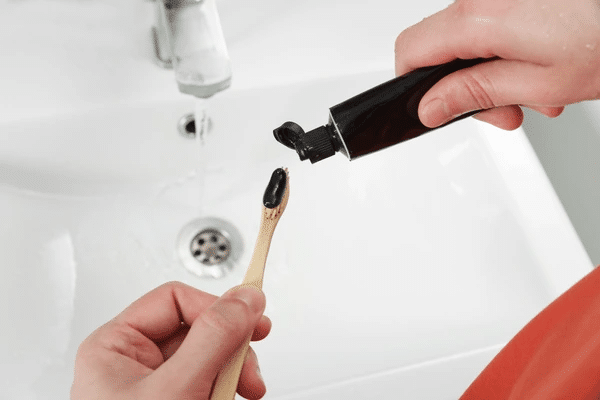
Safety is a key consideration. The abrasive nature of charcoal can cause problems if used too often:
- Enamel Erosion – Repeated abrasion can permanently wear down enamel.
- Tooth Sensitivity – Thinning enamel exposes dentin, causing discomfort with hot or cold foods.
- Gum Damage – Charcoal particles may lodge in gums, leading to irritation.
- Damage to Dental Restorations – Crowns, veneers, and fillings can trap charcoal particles, appearing darker or worn.
Dental professionals usually recommend limiting charcoal toothpaste or using it occasionally rather than as a daily product, especially for those with sensitive teeth.
Charcoal Toothpaste Side Effects
Some of the common charcoal toothpaste side effects include:
- Dull or yellow teeth over time due to enamel erosion.
- Increased tooth sensitivity.
- Dark particles stuck around veneers, crowns, or fillings.
- Reduced cavity protection because most charcoal toothpastes lack fluoride.
Because of these risks, relying solely on charcoal toothpaste may do more harm than good.
Charcoal Toothpaste vs Traditional Whitening Toothpaste
Here’s how charcoal compares with conventional whitening toothpaste:
| Feature | Charcoal Toothpaste | Traditional Whitening Toothpaste |
| Whitening Method | Abrasive surface stain removal | Mild abrasives + peroxide or optical agents |
| Effectiveness | Only removes surface stains | Can gradually lighten enamel |
| Safety | High abrasiveness; enamel risk | Safe for daily use |
| Fluoride Content | Often absent | Usually included |
| Long-Term Use | Not recommended daily | Safe for daily brushing |
While charcoal toothpaste may give quick, visible results for heavy surface stains, traditional whitening toothpaste provides a more consistent, long-term solution that is safer for enamel.
Who Will Benefit from Charcoal Toothpaste?
The effectiveness of charcoal toothpaste varies:
- People with heavy surface stains may see immediate cosmetic improvement.
- Individuals with intrinsic discoloration (from age, genetics, or medication) will notice little change.
- Frequent users may risk enamel erosion, sensitivity, and discoloration around dental restorations.
Ultimately, does charcoal toothpaste work depends on your tooth type, the type of stains, and how carefully you use it.
Professional Advice on Charcoal Toothpaste and Dental Care
Dental professionals, including the experienced team at Dental Scotland, provide guidance to ensure patients maintain both a bright smile and healthy teeth. While charcoal toothpaste has become a popular trend for whitening, it is important to understand its limitations and potential risks. One of the key recommendations is to use fluoride toothpaste regularly. Fluoride strengthens tooth enamel, helping to protect against decay and sensitivity. Unlike charcoal toothpaste, which can be abrasive, fluoride toothpaste supports long-term dental health while helping to prevent cavities.
Experts also advise limiting the use of charcoal toothpaste or avoiding daily use. This is because repeated use can wear down enamel over time. Enamel is the protective outer layer of the teeth, and once it is lost, it cannot regenerate. Excessive abrasion from charcoal particles can make teeth more prone to sensitivity, discoloration, and damage to dental restorations like veneers, crowns, or fillings.
For those looking for noticeable teeth whitening results, dental professionals recommend professional whitening treatments rather than relying solely on over-the-counter charcoal products. Professional whitening options at Dental Scotland are tailored to each patient’s needs, providing safe, predictable, and long-lasting results. These treatments often use controlled bleaching agents or optical brightening methods that minimize enamel damage while effectively lightening tooth color.
Finally, maintaining regular dental checkups is essential. Routine visits help remove plaque and tartar buildup, monitor oral health, and detect early signs of tooth decay or enamel wear. At Dental Scotland, patients can also access cosmetic dentistry services such as composite bonding, veneers, and clear aligners, which not only improve aesthetics but also support overall dental health.
In summary, the professional advice emphasizes a balance: safe daily care with fluoride toothpaste, cautious use of abrasive products like charcoal toothpaste, and leveraging professional dental treatments to achieve a healthy, bright, and lasting smile.
Conclusion: Is Charcoal Toothpaste Worth It?
To answer the question does charcoal toothpaste work: it can help remove surface stains temporarily, but it cannot change the natural shade of your teeth. While there are some charcoal toothpaste benefits, the risks—such as enamel erosion, increased sensitivity, and damage to dental restorations—make it unsuitable for daily use.
For those seeking long-lasting results, professional guidance is the best approach. At Dental Scotland, patients have access to a full range of dental services that promote both aesthetics and oral health:
- Teeth Whitening – Safe, professional options for a brighter smile.
- Composite Bonding – Repair and improve teeth appearance.
- Dental Implants – Permanent solutions for missing teeth.
- Clear Aligners – Straighten teeth discreetly.
- General Dentistry – Comprehensive care to keep teeth healthy.
- Orthodontics & Pediatric Dentistry – Ensure children and adults maintain optimal oral health.
In summary, while charcoal toothpaste for whitening can offer a short-term cosmetic boost, professional dental care at Dental Scotland provides reliable, safe, and effective solutions for a lasting, confident smile.